

Zakat on camels
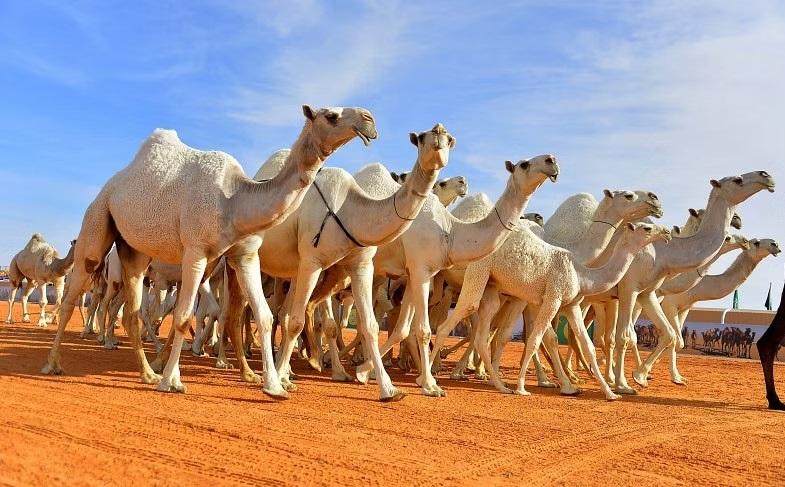

Zakat is a fundamental pillar of Islam, and Allah Almighty has commanded it to help the poor and improve their conditions so they can live a dignified life away from asking and begging. Allah has promised great reward and blessings for those who give zakat from their wealth, as it is a means of drawing closer to Him under specific conditions. Zakat on camels is obligatory for anyone who owns this livestock wealth.
Therefore, in this article, we will explore the nisab (minimum threshold) for camel zakat, how to calculate it, and whether it can be paid in cash.
Table of Contents
Explanation of Camel Zakat
Camel zakat is a religious duty prescribed by Islam on every camel owner, in which a portion of the camels is given according to the number owned. It is obligatory on owners of livestock wealth, preferably female camels, and is usually taken from the middle portion of the herd. It carries immense reward and blessings from Allah.
It is noteworthy that Allah has warned against withholding camel zakat, as the camels will gore the owner with their horns, and he will be held accountable on the Day of Judgment for neglecting it.
Importance of Camel Zakat
The importance of camel zakat lies in several aspects:
- Purifying wealth and the soul from stinginess or miserliness and training the self in generosity and giving.
- Helping the poor, which achieves social solidarity and reduces disparities in society.
- Multiplying reward and blessings from Allah.
- Blessing and multiplying provision and protecting camels from disease.
Nisab of Camel Zakat
The minimum nisab for camel zakat is five camels, for which one sheep is due. For ten camels, two sheep are due. If the camels are grazing and belong to a single owner, one sheep is due. For fifteen camels, three sheep are due, for twenty camels, four sheep, and for twenty-five grazing camels, a "bint makhad" (female camel of a specific age) is due.
Therefore, the more camels owned, the nisab varies, as it must align with the size of the wealth.
How to Determine the Nisab in Camels
First, the camels must be grazing, with a minimum of five heads. If there are fewer than five camels, no zakat is due. Additionally, a full lunar year must pass while owning the camels for the zakat to be valid.
How to Calculate Camel Zakat
Camel zakat is calculated based on the number of camels starting from five heads as follows:
- From 5 to 9 heads: one sheep is due.
- From 10 to 14 heads: two sheep are due.
- From 15 to 19 heads: three sheep are due.
Paying Camel Zakat in Cash
Camel zakat may be paid in cash in two cases:
- When there is a necessity or benefit, especially if it serves the poor. However, it is preferable to pay it in camels.
- If the payer does not have camels of the required age for zakat, cash may be given as compensation.
Opinions on Paying Camel Zakat in Cash
Here are some opinions regarding paying camel zakat in cash:
- The majority hold that zakat must be from the same type of wealth, i.e., camels themselves.
- The Malikis, Shafi'is, and Hanbalis consider it disliked or even prohibited in some opinions.
- Ibn Taymiyyah and others permit paying camel zakat in cash if it benefits the poor.
Conditions for Camel Zakat
The following are the essential conditions for valid camel zakat with full reward:
- The nisab must be five camels or more.
- A full lunar year must pass while owning the camels.
- The camels must be grazing naturally and not fed artificially for a full year.
- All camels must be of the same type and not a mix of different types.
Cases of Exemption from Camel Zakat
Camels are exempt from zakat in the following cases:
- If the number is below the nisab, i.e., less than five camels.
- If the camels are artificially fed and not grazing.
- If the camels are used for plowing or transport, as they are considered working animals and not subject to zakat.
- If a full lunar year has not passed.
Frequently Asked Questions
How is camel zakat calculated?
Camel zakat is calculated as follows:
- From 5 to 24: one sheep for every five camels.
- 25 to 35: one "bint makhad" (female camel aged one year entering second year).
- 36 to 45: "bint labun" (female camel aged two years entering third year).
- 46 to 60: "haqqa" (female camel aged three years entering fourth year).
- 61 to 75: "jaz'a" (female camel aged four years entering fifth year).
- 76 to 90: "binta labun".
- 91 to 100: "haqqah".
- 101 to 109: two "haqqah" and one "bint labun".
When is zakat due on camels?
Zakat is due on camels when they reach the nisab, a full lunar year has passed, and they are grazing naturally.
What is the nisab of zakat on camels, cows, and sheep?
Camel nisab:
- 5 to 24: one sheep for every 5 camels.
- 25 to 35: one "bint makhad".
- 36 to 45: "bint labun".
- 46 to 60: "haqqa".
- 61 to 75: "jaz'a".
- 76 to 90: "binta labun".
- 91 to 100: "haqqah".
- 101 to 109: two "haqqah" and one "bint labun".
Cow nisab:
- 30-39: one calf completed one year.
- 40-59: one cow aged two years.
- Every 30, a calf; every 40, a cow.
Sheep nisab:
- 40-120: one sheep, either a young sheep or goat.
- 121-200: two sheep.
- One sheep for every 100 sheep thereafter.
How much zakat is due on 120 camels?
The zakat due on 120 camels is 5 "haqqah" or one "bint labun" according to Islamic division rules.