

Expiation in Islam


God Almighty has made expiation (kaffarah) a lawful means to atone for sins and erase misdeeds. This is part of Allah’s generosity and His love for His believing servants. Expiation strengthens faith by reminding the believer of the consequences of disobeying Allah’s commands. All of this is from Allah’s mercy toward His servants, correcting their path by opening the door of expiation away from the harshest punishment.
Therefore, we present to you the lines of our article so that we may learn together about the types of expiation, leading to how to donate through the trusted Al-Wafaa Association.
Table of Contents
The Concept of Expiation in Islam
Expiation is every act that Islam has prescribed for the purpose of atoning for a sin or wrongdoing committed by a Muslim. It is called “expiation” because it erases wrongdoing and covers sins. Expiation is considered one of the means of repentance to Allah Almighty for mistakes or shortcomings toward Muslims or toward Allah Almighty.
Expiation linguistically: a word derived from “kafara,” meaning to cover and conceal.
Expiation in Islamic law: what a Muslim does to cover a mistake or sin that has been committed, which the Shariah prescribes when there is negligence or the commission of a sin, in order to show remorse, purify the soul, and strengthen the relationship with Allah Almighty.
Expiation in the Holy Qur’an and the Prophetic Sunnah
Expiation in the Holy Qur’an is considered a legal ruling that erases misdeeds and atones for them. It is a divine mercy sent down by Allah Almighty as a door of repentance whose purpose is to return the believer to the path of faith and guidance and to reform the self in order to build a righteous, cooperative society.
Therefore, several verses in the Holy Qur’an mention expiation, including:
Allah Almighty says: “…But He will take you to account for what you have bound by oaths. So its expiation is the feeding of ten needy persons from the average of that which you feed your families… And whoever does not find [the means], then fasting three days. That is the expiation for your oaths when you have sworn. And keep your oaths…” (Al-Ma’idah 5:89).
Allah Almighty says: “And We ordained for them therein: a life for a life, an eye for an eye, a nose for a nose, an ear for an ear, a tooth for a tooth, and for wounds is retribution. But whoever gives [the right of retribution] as charity, it is an expiation for him. And whoever does not judge by what Allah has revealed—then it is those who are the wrongdoers.” (Al-Ma’idah 5:45).
Allah Almighty says: “…or a sacrifice reaching the Ka‘bah, or an expiation: feeding the needy or the equivalent of that…” (Al-Ma’idah 5:95).
Expiation in the Prophetic Sunnah
Expiation in the noble Prophetic Sunnah is a jurisprudential ruling that does not change in Islamic law and is represented by prescribed acts upon a Muslim, such as fasting, freeing a slave, or feeding the poor. This depends on the type of sin committed.
Abu Hurairah (may Allah be pleased with him) reported that the Messenger of Allah said: “Whoever swears an oath and then sees something better than it, let him make expiation for his oath and do what is better.” (Narrated by مسلم – Riyadh as-Salihin 1716).
It was also reported that the Prophet (peace be upon him) said: “By Allah, if Allah wills, I do not swear an oath and then see something better than it except that I make expiation for my oath and do what is better.”
Types of Expiation in Islam
There are several types of expiation in Islam. They differ according to the negligence or sin committed, as follows:
Expiation for an Oath
Expiation for an oath is the compensation prescribed by Allah for one who breaks an oath. Allah Almighty says: “Allah will not hold you accountable for unintentional oaths, but He will hold you accountable for what you have bound by oaths. So its expiation is feeding ten needy persons from the average of that which you feed your families, or clothing them, or freeing a slave…” (Al-Ma’idah: 89). It is as follows:
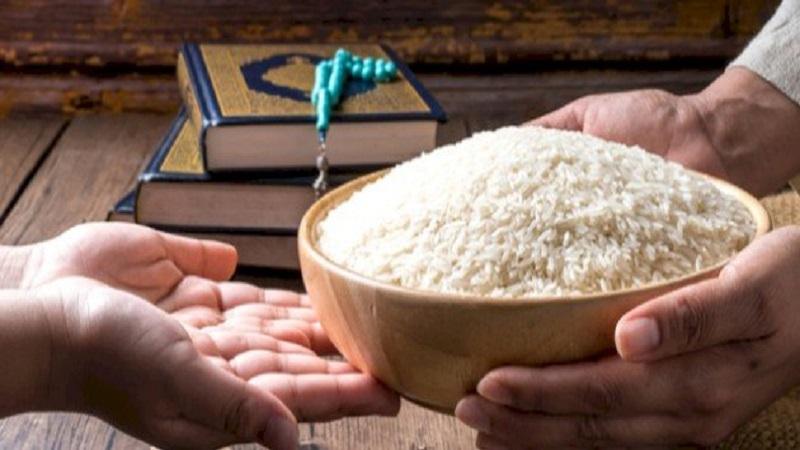
Feeding ten needy persons with the equivalent of one meal for lunch or dinner, amounting to half a saa‘ of the staple food of the land such as rice, wheat, or dates for each person.
Clothing ten needy persons with sufficient clothing.
Freeing a slave.
Whoever is unable to do any of the above must fast three days.
Expiation for Fasting
Expiation for fasting is the required legal compensation for a Muslim who breaks the fast in Ramadan, and it varies according to the reason:
Whoever breaks the fast without a legitimate excuse must fast two consecutive months and then feed sixty needy persons. The evidence for this is the saying of the Prophet (peace be upon him): “Whoever breaks one day of Ramadan without an excuse will not make up for it even if he fasts for a lifetime.” (Narrated by al-Bukhari).
Whoever breaks the fast due to a legitimate excuse such as travel, illness, or old age must feed one needy person for each day broken.
As for delaying the makeup of Ramadan without an excuse until the next Ramadan, the expiation is feeding one needy person for each day of delay.
Expiation for Hajj
Expiation for Hajj is a required legal compensation for every pilgrim who commits an error, a violation, or a breach in performing the rites of Hajj, as follows:
The expiation for leaving one of the obligations of Hajj, such as not standing at ‘Arafah, not throwing the pebbles, or not entering ihram from the designated miqat, is the sacrifice of a sheep to be distributed to the poor in the Haram, or fasting ten days—three during Hajj and the rest upon returning home.
The expiation for being prevented (ihsar) from completing the rites due to illness or a compelling circumstance is the sacrifice of a sheep.
The expiation for killing game while in ihram is either offering a sacrifice such as a sheep, or feeding a half saa‘ to each needy person, or fasting a number of days according to the value of the food.
The expiation for committing one of the prohibitions of ihram, such as using perfume, shaving, or wearing stitched clothing, is the sacrifice of a sheep, or feeding six needy persons, or fasting three days.
The expiation for intercourse before exiting the state of ihram is the sacrifice of a camel; if one cannot, then a cow or seven sheep, or feeding and fasting according to financial ability.
Expiation for Killing
The expiation for killing differs according to the type of killing, whether intentional or accidental.
Expiation for Intentional Killing
The expiation for intentional killing is:
Retaliation (qisas), meaning the killer is executed unless pardoned.
Paying blood money (diyyah) in lieu of retaliation to the victim’s family.
Forgiveness without any compensation.
Expiation for Accidental Killing
Freeing a believing slave.
Fasting two consecutive months if one cannot find a slave.
Paying blood money, agreed upon either as one hundred camels or their equivalent value.
Expiation for Zihar
Zihar refers to a man saying to his wife, “You are to me like my mother’s back,” meaning she becomes unlawful to him. The expiation is in the following order:
Freeing a believing slave; if he cannot, he moves to the second expiation.
Fasting two consecutive months.
Feeding sixty needy persons with sufficient food.
Donate Expiation to the Needy and Refugees
If you wish to donate expiation to refugees and the needy, you only need to rely on the humanitarian charitable Al-Wafaa Association, which enjoys great trust in delivering donations to those who deserve them among the poor and needy.
It has an experienced and specialized team that is well acquainted with all families in need. Therefore, hurry to visit the headquarters of Al-Wafaa Association or donate online through the following link: elvefa.
Frequently Asked Questions
What are the types of expiation in Islam?
There are several types of expiation, including expiation for oaths, zihar, killing, fasting, Hajj, vows, and delaying the makeup of Ramadan.
To whom is expiation given?
Expiation is given to the poor and needy and to relatives whose maintenance is not obligatory upon you if they are in a state of need.
What does expiation mean in Islam?
Expiation is what the Shariah has prescribed to cover sins and atone for them when a wrongdoing is committed or when there is negligence in acts of worship.
Which oath requires expiation?
The oath that requires expiation is the binding oath, which is taken with firm intent regarding doing something in the future and then breaking it.